
Resolve to Save Lives

How El Salvador acted quickly to contain a malaria outbreak

Using the 7-1-7 target, public health officials in El Salvador managed to stop the spread of imported malaria cases and maintain the nation’s malaria-free status.

About Malaria

Malaria is a disease spread by mosquitoes infected with the Plasmodium parasite. Many cases result in mild symptoms, such as fever, chills and headaches. But the infection can cause more serious symptoms, including breathing difficulty, confusion, seizures and death. Malaria is one of the deadliest diseases in the world, infecting 282 million people and killing 610,000 each year as well as costing African economies $12 billion a year.

The Pan American Health Organization is leading a malaria elimination effort in the Americas, where 536,700 cases and 136 deaths occurred in 2024. Elimination efforts enabled El Salvador to achieve malaria-free status in 2021, making it one of only five such countries in the region. Since then, two or three imported cases have been detected in El Salvador each year. Ongoing prevention strategies, including vector control measures and early testing of symptomatic cases, are helping preserve the country’s malaria-free status.

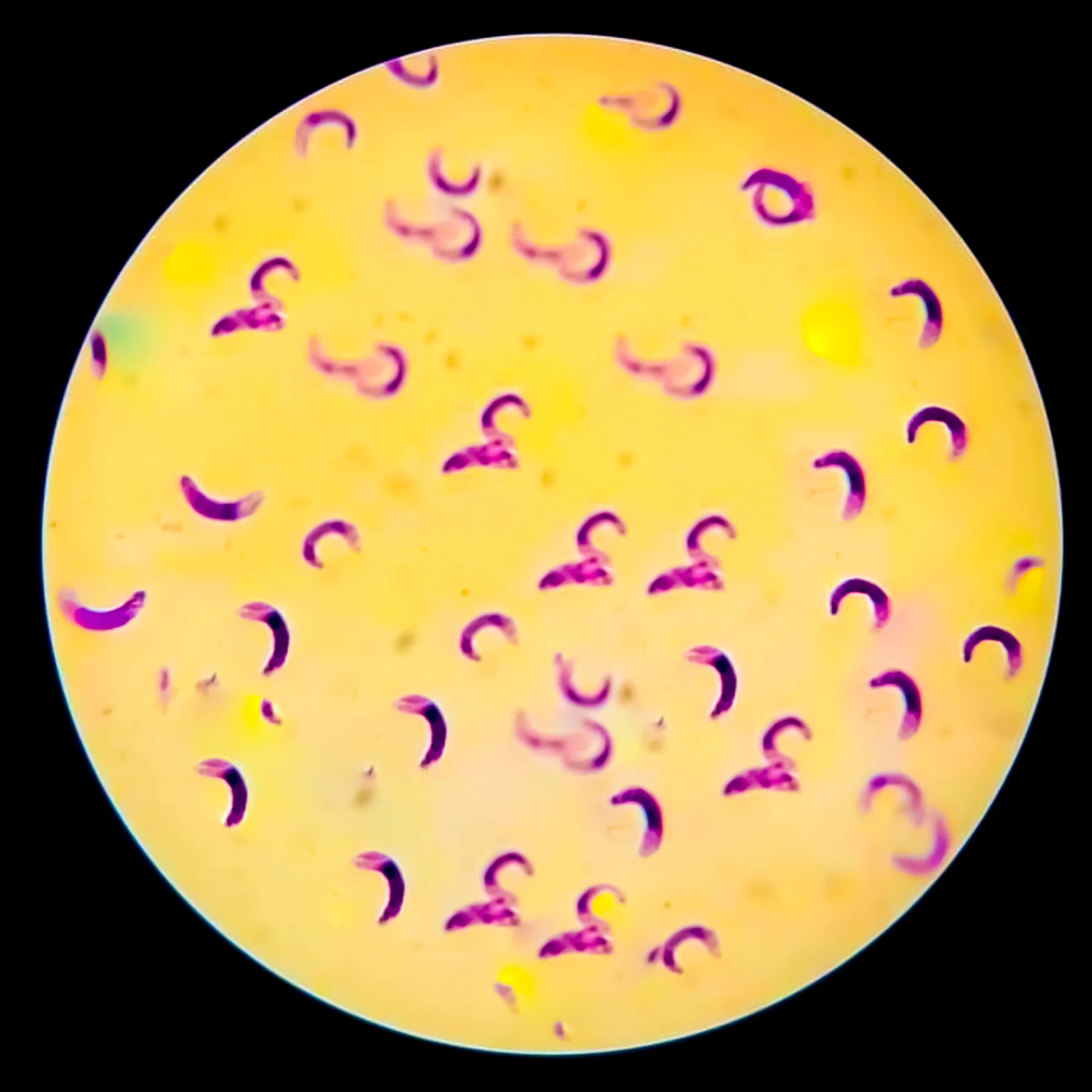
Microscope image: Plasmodium falciparum, the malaria-causing parasite, visible inside infected red blood cells.

What Happened

In September 2025, 313 Salvadoran men prepared to travel home from the Democratic Republic of Congo. These men had been working in malaria-endemic regions where limited local health resources and inconsistent preventative treatment left them vulnerable to infection. While many remained asymptomatic during their transit, the group represented a concentrated biological threat—a large, mobile population potentially carrying the malaria parasite back to a nation where the disease was no longer a major concern.
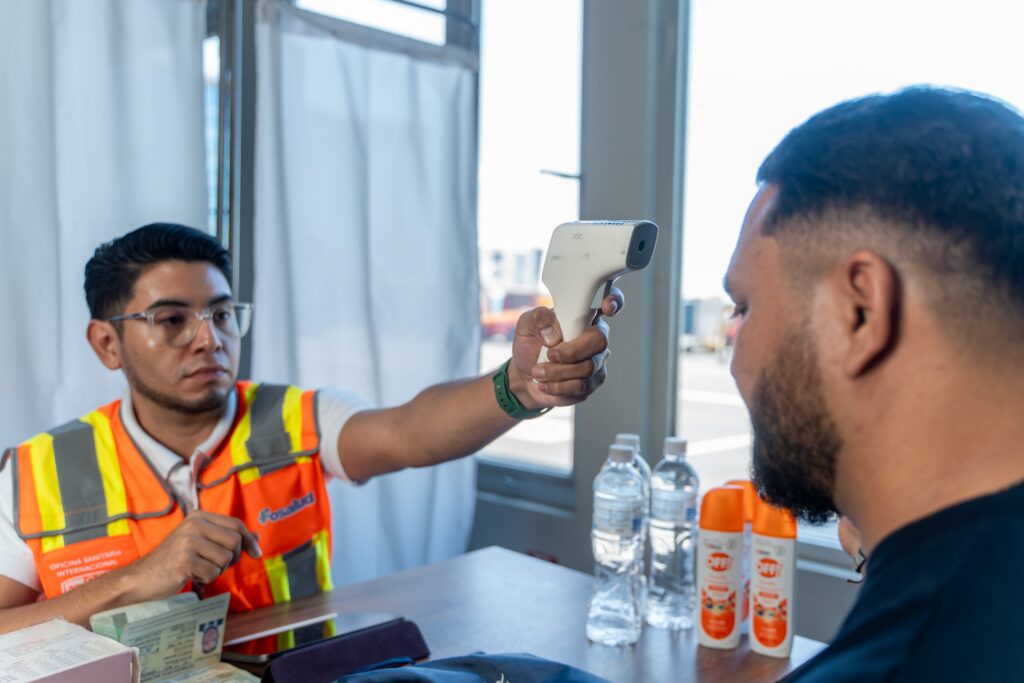
An El Salvadorian national returning from the Congo is screened for malaria

César Velásquez Arteaga at El Salvador’s Ministry of Public Health received the names and flight details of the individuals ahead of their arrival. With this information in hand, the Ministry sent a team to screen the men upon their return. On September 7, the first group arrived into El Salvador and all underwent testing and isolation while waiting for lab results. Eight tested positive on arrival but the rest tested negative and were allowed to return home. Because they knew malaria could surface later, officials organized follow-up testing for those that returned home and surfaced an additional five cases, sparking fears that the disease could reemerge in these malaria-free zones and put local communities at risk.

After this initial group of arrivals, hundreds of men continued to arrive on different flights over a period lasting several weeks, placing increased demands on health officials and keeping the threat of malaria alive. As the rest of the group returned home over the next several weeks, the number of cases eventually ballooned to 113, sparking fears that the disease might become endemic once again.
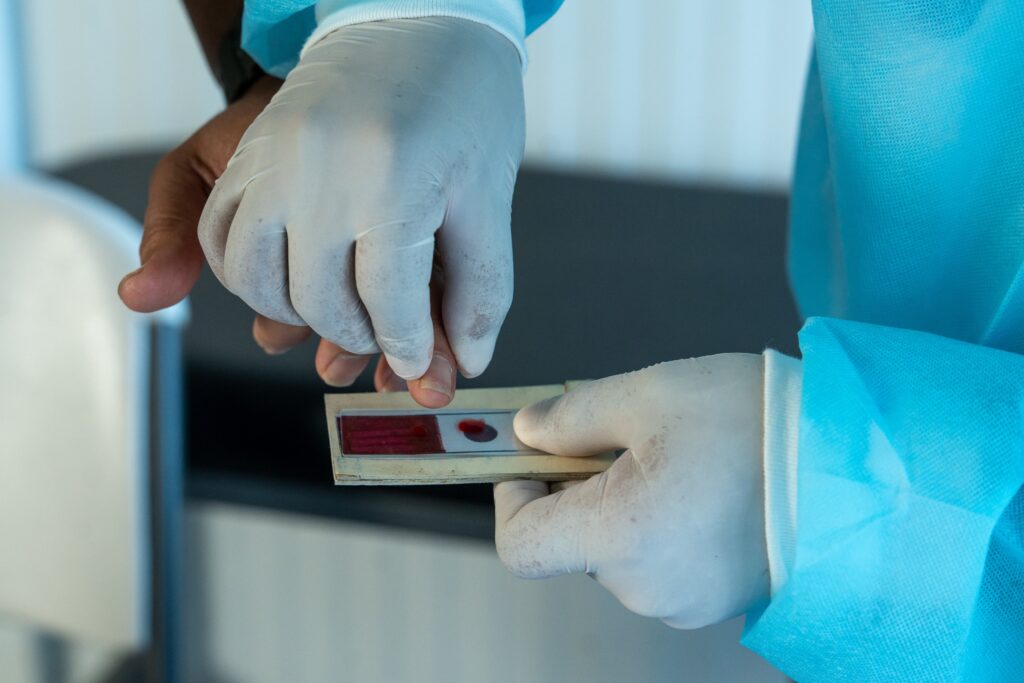
A patient has a thick blood smear to test for malaria

The Response

Timeline

Target: 7 days

< 1 day

Emergence
Detection

Target: 1 day

1 day

Notification

Target: 7 days

1 day

Response

A high-speed, cross-sector coordination strategy helped contain the cases before the men even landed: “We already had a structure available and active to respond,” Dr. Velásquez Arteaga explained. By working together with the Ministry of Foreign Affairs, immigration officials and airlines, Dr. Velásquez’s team was ready to detect any cases by testing the men on arrival, then again at seven, 14 and 21 days. Strong communication between the Ministry of Health and facilities and health care workers at the local level, meanwhile, was critical in mounting an initial response within 24 hours of the first confirmed cases.

This coordination was maintained through a rigorous daily rhythm. Public health leaders from all five of the country’s regions met every morning for briefings, followed by afternoon national sessions where a real-time, geolocated dashboard tracked critical response metrics including cases, testing, medication administration and local vector control measures.
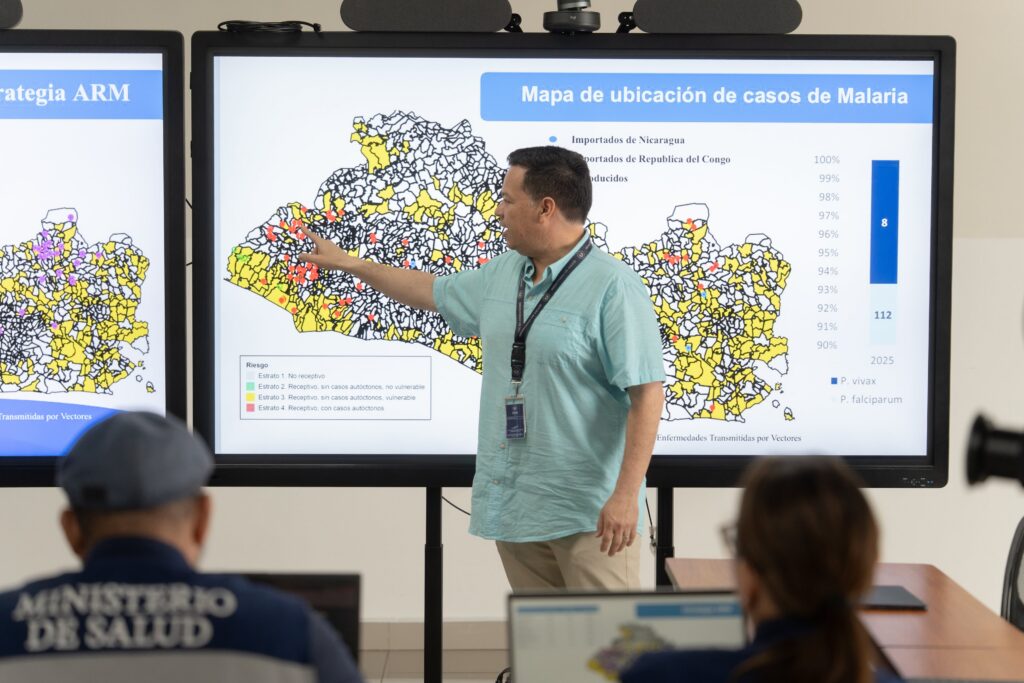
Health officials coordinate response efforts across the country

As the men returned home, cases reached 13 of El Salvador’s 14 departments, which presented a major logistical bottleneck for the distribution of antimalarials. “At the time, we had little medication, so transporting it to each location was difficult for us, and this bottleneck slowed down the administration of medication,” said Dr. Ana Maria Barrientos Llovet at the Ministry of Public Health, who also served as a consultant to the Pan American Health Organization with 7-1-7 Alliance funding.

The Ministry made the strategic decision to capitalize on the country’s geography by centralizing malaria care at a single hospital located in a high-altitude region. Because the malaria-carrying vectors cannot survive at such elevations, this move ensured that patients received supervised, high-quality treatment in a buffer zone where the risk of reestablishing local transmission was effectively zero.

On the ground, local response teams turned individual cases into containment zones. For every confirmed infection, authorities established a five-kilometer “vector control perimeter” involving fumigation and distribution of insecticide-treated bed nets. Within a tighter one-to-two-kilometer radius, community health promoters conducted active surveillance, testing the entire population within the established perimeter to ensure the parasite hadn’t jumped from the travelers back to the community.
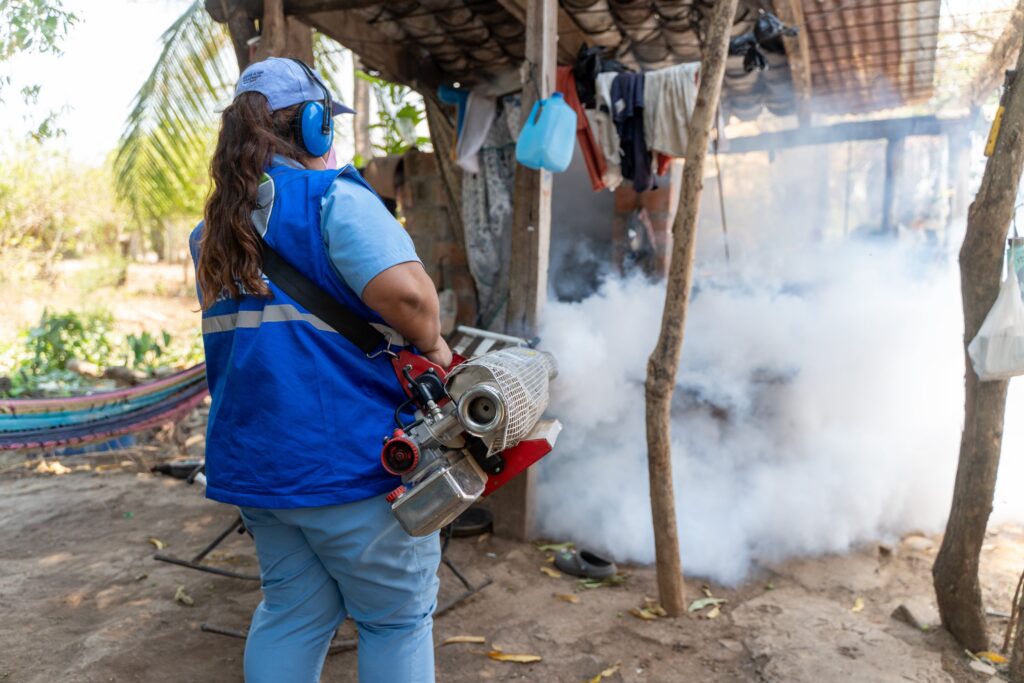
Local response teams fumigate homes inside the vector control perimeter

Finally, to manage the sudden surge of nearly 100,000 tests, the Ministry overhauled its diagnostic infrastructure by establishing a dedicated 24-hour collection and testing center, allowing them to clear a massive backlog and ensure prompt diagnoses within 24 hours. This round-the-clock laboratory, combined with mandatory treatment for anyone returning to El Salvador from DRC, successfully halted the outbreak.

By the time the team concluded its response efforts, not a single secondary case had been recorded beyond the 113 cases among the initial group of travelers, and the outbreak was stopped with no reported deaths.

Enablers

Early detection using health screening and blood tests

24-hour laboratory to process the surge in samples

Vector control interventions in residential areas

Setting the stage for success

The rapid response to the malaria outbreak was not happenstance. It was enabled by nationwide training on the 7-1-7 target, which El Salvador had started implementing in early 2025. A few months after this training, officials created a standard operating procedure for institutions to alert authorities to potential health concerns and the Ministry of Health later released a national guideline incorporating 7-1-7 for addressing public health events, including epidemics, which was the first of its kind in the Americas.

El Salvador was a pioneer in proposing to use the 7-1-7 target for health care-associated infections

Dr. Barrientos Llovet, Ministry of Public Health

“Part of the outbreak guideline is an early assessment of action using 7-1-7. It is already institutionalized and standardized for any type of event response,” Dr. Velásquez Arteaga said. “We held intersectoral roundtable meetings for early action assessments. We learned about the 7-1-7 target and procedures and mapped out the systems and flow of information in the participating institutions.”

Epidemiologists from around the country received an orientation on 7-1-7 in April 2025, supported by the Ministry of Public Health and the U.S. Centers for Disease Control and Prevention. Then, in June 2025, epidemiologists began applying 7-1-7 to past outbreaks to identify bottlenecks and enablers to effective response efforts. Hospital epidemiologists also received training in late June and began using 7-1-7 for health care-associated infections.

El Salvador was a pioneer in proposing to use the 7-1-7 target for health care-associated infections

Dr. Barrientos Llovet, Ministry of Public Health
“El Salvador was a pioneer in proposing to use the 7-1-7 target for health care-associated infections,” Dr. Barrientos Llovet said. Cross-training across sectors in El Salvador also led to the application of 7-1-7 to outbreaks that spread from animals to humans, as well as to poisoning and chemical exposure events, she noted.

The 7-1-7 target was applied as malaria cases began appearing among returning travelers, and helped authorities quickly identify the bottleneck in laboratory capacity. Since the outbreak, El Salvador’s public health authorities have implemented improved protocols for assessing malaria risk among travelers, provided proactive malaria treatment to those at risk and deployed rapid malaria tests across the country. They are also working with international partners like the Pandemic Fund to bolster laboratory capacity and nationwide availability of antimalarial medications, and to ensure strong cross-border and point of entry efforts responses like this to stop future outbreaks at their source.

Ultimately, strong intersectoral communication and prior outbreak response planning, including the use of 7-1-7, helped to quickly contain what could have been a much worse outbreak that threatened the nation’s population and its malaria-free status.

Do you know of an epidemic that didn't happen?

If so, we’d love to highlight your story. Please reach out to
info@resolvetosavelives.org